


Improving Uptime with Advanced Data Center Cooling Systems
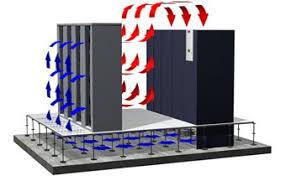
In today’s digital era, data centers form the backbone of enterprises, cloud services, and critical infrastructure. Ensuring their efficient operation requires precise environmental control, making data center precision air conditioning (DC PAC) a vital component. Unlike traditional cooling systems, precision air conditioning units are designed to maintain specific temperature and humidity levels with high accuracy, supporting the uninterrupted performance of sensitive IT equipment. As businesses increasingly rely on large-scale computing and storage, the role of DC PAC systems in optimizing energy usage, protecting hardware, and ensuring operational stability has become indispensable.
The core of data center precision air conditioning lies in its ability to maintain strict environmental parameters. These systems typically include components such as chillers, cooling coils, air handlers, and advanced monitoring sensors. The integration of temperature and humidity controls allows the units to react instantly to changes in heat loads, preventing overheating and condensation that could damage servers or network equipment. Additionally, precision air conditioners often employ variable-speed fans, intelligent airflow management, and redundancy configurations to ensure consistent performance even during component failure or maintenance cycles. This combination of precision control and reliability distinguishes them from standard HVAC systems, which may struggle with the highly dynamic thermal loads of modern data centers.
Applications of DC PAC span across a variety of industries that demand high availability and performance from their IT infrastructure. Cloud service providers, colocation facilities, financial institutions, and healthcare organizations rely on these systems to safeguard critical data and ensure seamless digital operations. In industrial settings, precision cooling is essential for managing high-density server racks or supporting edge computing installations in factories and research facilities. Moreover, government data centers and telecommunications hubs also depend on such systems to meet stringent regulatory and operational requirements, highlighting the broad relevance of precision air conditioning across sectors that require controlled environments for sensitive equipment.
Several factors are driving the adoption and growth of data center precision air conditioning. The proliferation of cloud computing, artificial intelligence, and high-performance computing has increased server density and power consumption, necessitating precise cooling solutions. Energy efficiency concerns have also gained prominence, prompting organizations to adopt systems that optimize power usage while maintaining strict thermal control. Additionally, rising awareness of equipment longevity and downtime prevention has encouraged data center operators to invest in advanced cooling technologies. With digital transformation initiatives accelerating across industries, the demand for reliable, high-performance cooling systems continues to present significant opportunities for manufacturers and service providers.
Despite these advantages, DC PAC systems are not without challenges. High initial investment and ongoing maintenance costs can be significant, particularly for small or medium-sized data centers. The complexity of installation and integration with existing infrastructure requires skilled personnel and careful planning. Moreover, evolving technology and increasing server densities can create a continuous need for system upgrades or capacity expansion. Environmental considerations, such as refrigerant management and energy consumption, also pose regulatory and sustainability concerns, requiring operators to balance operational efficiency with ecological responsibility.
Innovation in precision air conditioning is shaping the next generation of cooling solutions. Emerging trends include the use of AI and machine learning for predictive maintenance, enabling systems to anticipate failures and optimize performance automatically. Liquid cooling and immersion cooling technologies are gaining attention for high-density environments, offering more efficient heat removal than traditional air-based systems. Integration with data center infrastructure management (DCIM) platforms allows operators to monitor and control environmental parameters in real time, enhancing operational transparency and efficiency. Additionally, modular and scalable solutions provide flexibility for data centers to adjust capacity as computing demands grow, making precision cooling more adaptable and cost-effective.
Regional and industry-specific insights reveal variations in adoption and deployment strategies. In North America and Europe, stringent energy efficiency regulations and advanced data center infrastructure have driven widespread use of high-performance DC PAC systems. Asia-Pacific markets, particularly in technology hubs, are witnessing rapid expansion due to the growing cloud services sector and increased investment in hyperscale data centers. Financial and healthcare sectors globally continue to prioritize precision cooling for compliance and reliability reasons, while industrial and telecommunications deployments often emphasize modular and high-density solutions to optimize space and energy utilization. These regional trends underline the strategic importance of tailoring precision air conditioning solutions to specific operational and regulatory environments.
The future of data center precision air conditioning appears poised for continued innovation and growth. As digital workloads intensify and server densities rise, the need for highly reliable, energy-efficient, and adaptable cooling solutions will only increase. Integration with smart building systems, renewable energy sources, and advanced monitoring technologies will enhance operational efficiency and sustainability. Furthermore, as edge computing and distributed data centers become more prevalent, precision air conditioning solutions will evolve to meet the demands of smaller, decentralized facilities. Overall, DC PAC systems will remain a cornerstone of modern data center infrastructure, supporting digital transformation, protecting critical assets, and enabling resilient, high-performance IT operations across industries.
Top Trending Reports -
Europe Blockchain Interoperability Market Trends

 English
 Arabic
 French
 Spanish
 Deutsch
 Türkçe
 Dutch
Dutch
 Italiano
 Russian
 Romaian
 Portuguese (Brazil)
 Greek
Greek