


Automotive Natural Gas Vehicle Market: Driving Toward Cleaner and Cost-Effective Mobility
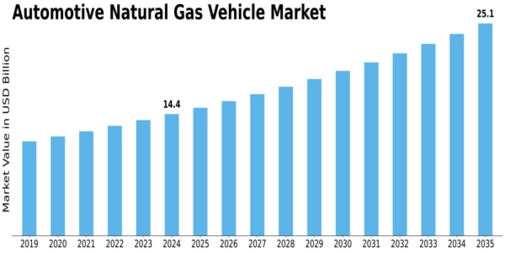
The Automotive Natural Gas Vehicle (NGV) Market is gaining significant momentum as global demand for cleaner and more sustainable fuel alternatives continues to rise. With rising fuel prices, growing environmental concerns, and government support for low-emission transport, natural gas vehicles are emerging as a viable solution to reduce dependency on conventional fossil fuels. The shift toward natural gas-powered vehicles—both Compressed Natural Gas (CNG) and Liquefied Natural Gas (LNG)—is reshaping the automotive landscape worldwide.
Market Overview and Demand Growth
The demand for NGVs is increasing rapidly, particularly in developing economies where natural gas infrastructure is expanding. Consumers and fleet operators are increasingly drawn to natural gas vehicles due to their lower operational cost, reduced emissions, and fuel efficiency. CNG vehicles dominate the passenger car and light commercial vehicle segments, while LNG is gaining ground in heavy-duty trucks and buses due to its extended range.
Countries like India, China, and Brazil are witnessing a substantial surge in NGV adoption as governments promote alternative fuels through incentives, subsidies, and emission regulations. The commercial transportation sector is a major driver, as logistics and fleet operators aim to reduce fuel costs and comply with tightening emission standards. Additionally, the availability of biogas and renewable natural gas (RNG) is further boosting market demand by enhancing the environmental sustainability of NGVs.
Scope and Market Analysis
The scope of the automotive NGV market extends across multiple sectors, including passenger vehicles, light commercial vehicles (LCVs), and heavy-duty trucks. Within these segments, the adoption rate depends on factors such as infrastructure availability, refueling station networks, and regional government policies.
-
Passenger Cars: CNG cars are becoming increasingly popular for urban commuters seeking a cleaner and more economical driving experience.
-
Light Commercial Vehicles (LCVs): Fleet operators prefer CNG-powered LCVs for delivery and intra-city transport due to their cost benefits.
-
Heavy Commercial Vehicles (HCVs): LNG trucks are gaining traction in long-haul applications as technology improvements enhance performance and range.
Geographically, Asia-Pacific leads the global NGV market, followed by Europe and North America. The rising focus on reducing urban pollution and increasing adoption of public transport fleets powered by CNG/LNG are accelerating growth in these regions.
Market Drivers and Opportunities
Several factors are propelling the automotive NGV market forward:
-
Rising Fuel Costs: Natural gas is cheaper compared to petrol and diesel, making it an economically viable fuel choice.
-
Stringent Emission Norms: Global environmental regulations encourage automakers to produce low-emission vehicles.
-
Infrastructure Expansion: Continuous development of CNG and LNG refueling stations is enabling large-scale adoption.
-
Technological Advancements: Improved engine designs and hybrid NGV systems are enhancing performance and efficiency.
The growing integration of renewable natural gas (RNG) and advancements in conversion technologies present vast opportunities for future growth. As more nations aim for carbon neutrality, NGVs are expected to play a crucial transitional role before full electrification.
Frequently Asked Questions (FAQ)
Q1. What is driving the demand for natural gas vehicles?
The primary drivers include lower fuel costs, environmental benefits, and government initiatives promoting alternative fuel adoption.
Q2. Which vehicle segments are leading in NGV adoption?
Passenger cars and light commercial vehicles dominate the market, while heavy-duty LNG trucks are gaining traction for long-distance transport.
Q3. What are the key challenges for the NGV market?
Limited refueling infrastructure and high initial conversion costs remain key challenges, though investments are steadily improving this scenario.
Q4. What is the future outlook for the Automotive NGV Market?
With growing clean energy initiatives and infrastructure expansion, the NGV market is poised for strong growth, particularly in Asia-Pacific and Latin America over the next decade.

 Arabic
 French
 Spanish
 Portuguese
 Deutsch
 Türkçe
 Dutch
Dutch
 Italiano
 Russian
 Romaian
 Portuguese (Brazil)
 Greek
Greek