


Virtual Valet Evolution: Powering the 2031 Roadmap for 3D Surround View Systems
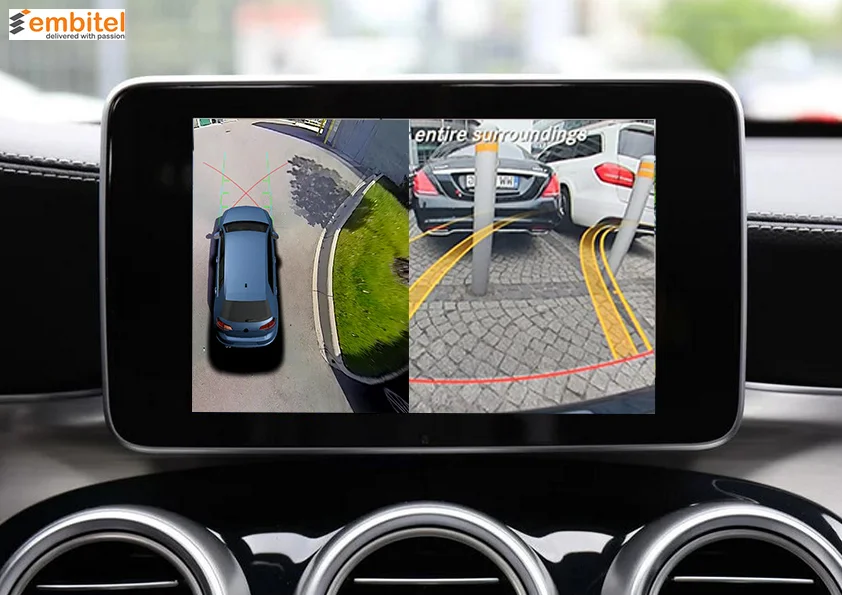
In the high-stakes race toward autonomous mobility and zero-accident urban environments, the 360-degree surround view camera has evolved from a luxury novelty into a fundamental safety requirement. Valued at US$ 1.7 Billion in 2022, the Global Automotive 360-degree Surround View Camera Market is projected to reach US$ 4.0 Billion by 2031, advancing at a robust CAGR of 10.5%.
As of April 2026, the industry has entered the "High-Fidelity Reconstruction" phase. A defining milestone in early 2026 is the mainstream adoption of Dynamic 3D Surround View, which uses advanced image-stitching algorithms to create a "transparent vehicle" effect on the infotainment screen. This 2026-gen technology allows drivers to see directly "through" the car's chassis to detect small obstacles or curb heights with millimeter precision. Furthermore, 2026 marks the integration of Surround View Data into AR-HUDs (Augmented Reality Head-Up Displays). In early 2026, premium OEMs like Mercedes-Benz and Lucid have begun projecting blind-spot video overlays directly onto the windshield during lane changes, effectively merging 360-degree external perception with the driver's natural line of sight. Additionally, the 2026 market is seeing a surge in "Sentry Mode" applications, where the 360-degree camera array serves as a 24/7 security perimeter, recording 4K footage of near-misses or attempted break-offs even when the vehicle is parked.
🚀 Strategic Growth Drivers: The 10.5% Momentum
The march toward US$ 4.0 Billion is fueled by the democratization of ADAS and the complexity of modern urban parking:
- Democratization in Mid-Range Vehicles: In 2026, the primary driver is the "Trickle-Down" effect. Once exclusive to the S-Class or 7-Series, 360-degree systems are now a standard offering or low-cost option in 2026-gen mid-sized SUVs and sedans from Hyundai, Toyota, and Volkswagen, dramatically expanding the 2026 customer base.
- Evolution of Level 3 & 4 Autonomy: By early 2026, surround-view cameras have become critical "redundancy sensors" for autonomous perception stacks. While LiDAR handles long-range mapping, the 2026 360-camera array provides the high-resolution, low-latency visual data needed for automated valet parking (AVP) in tight multi-story garages.
- Side-Mirror Replacement (CMS): In 2026, the adoption of Digital Side-Mirrors is accelerating. By integrating side-view cameras into the 360-degree ecosystem, 2026-gen vehicles reduce aerodynamic drag by up to 3%, a crucial metric for extending the range of the 2026-2030 generation of electric vehicles.
🧪 Technological Frontier: The 2031 Roadmap
The next decade will focus on AI-Driven Stitching and Multi-Spectral Clarity:
- AI Parallax Correction: In 2026, "stitching artifacts"—the blurry lines where camera feeds meet—are being eliminated through Real-Time Neural Rendering. These 2026 algorithms correct for parallax errors, ensuring that pedestrians appearing at the corners of the vehicle are displayed without distortion, a key requirement for 2026 safety ratings.
- Low-Light & Thermal Integration: By early 2026, the "All-Weather 360" is a major R&D focus. New High-Dynamic-Range (HDR) sensors paired with near-infrared illumination allow 2026 surround-view systems to maintain color accuracy and object detection in near-total darkness, supporting the 2031-horizon of "Vision-Only" autonomous fleets.
- Wireless SMT Camera Modules: For the 2031 roadmap, the focus is on Installation Simplicity. In 2026, manufacturers are testing Wireless 360 Camera Modules for the aftermarket and commercial vehicle segments, utilizing ultra-wideband (UWB) to stream lag-free video to the dashboard without the need for complex, heavy internal wiring harnesses.
🌎 Regional & Segment Insights
Asia-Pacific: The Dominant Growth Hub
Holding over 40% of the market share in 2026, APAC remains the leader. The 2026 trend is driven by China and Japan, where high vehicle density and narrow urban streets make 360-degree cameras an essential "quality of life" feature for 2026 car buyers.
Europe & North America: The Regulatory & Tech Leaders
In 2026, Europe leads in Safety Compliance, with 360-degree systems being integrated into mandatory lane-keep and collision-avoidance validation. In North America, the 2026 focus is on Luxury & Light Truck applications, where surround-view is used to assist in trailer hitching and off-road navigation.
Segment Focus: Component & Vehicle Type
- Camera Unit (Hardware): Remains the largest revenue segment in 2026, specifically the shift toward 8MP sensors to support 4K display resolutions.
- Software/Image Processing: The fastest-growing segment in 2026, as OEMs move toward centralized compute architectures where 360-degree stitching is handled by the vehicle's main AI chip.
- Passenger Cars: Account for over 70% of applications in 2026, though Light Commercial Vehicles (LCVs) are seeing a 2026 spike in adoption for urban delivery safety.
🏁 Conclusion: The Era of "Omni-Directional Awareness"
By 2031, the Automotive 360-degree Surround View Camera will be the definitive standard for vehicle-human interaction. The growth to US$ 4.0 Billion reflects a market that has moved beyond "assistance" into "augmented reality." The winners of 2031 will be those who, in 2026, perfected the software-driven integration of external vision with in-cabin AR displays.

 Arabic
 French
 Spanish
 Portuguese
 Deutsch
 Türkçe
 Dutch
Dutch
 Italiano
 Russian
 Romaian
 Portuguese (Brazil)
 Greek
Greek