


Cleaning Robot Technology Firms: A Detailed Company List
The future of the cleaning robot market is poised to be defined by a series of transformative trends that will push the boundaries of autonomy, functionality, and integration, creating new opportunities for the leading companies. A forward-looking analysis of the Cleaning Robot Companies List suggests a clear trajectory towards greater multifunctionality and environmental awareness. The current trend of combining vacuuming and mopping is just the beginning. In the future, we can expect to see a single robotic platform capable of performing an even wider range of tasks. For example, a robot might be equipped with a HEPA filter and UV-C light for air purification and surface sanitization, a critical feature in a health-conscious world. Some companies are exploring concepts where a robot could have a manipulator arm to pick up clutter before cleaning, or could automatically switch between different cleaning tools stored at its docking station. The ultimate vision is a truly autonomous home or facility caretaker, and companies that can successfully develop and integrate these multiple functionalities into a single, reliable platform will gain a significant competitive advantage.
Another major trend shaping the future is the deeper integration of cleaning robots into the broader smart home and smart building ecosystems. Currently, most integrations are limited to simple voice commands via smart assistants. In the future, the robot will become a more active and intelligent participant in the ecosystem, sharing data with other smart devices to create more sophisticated automations. For instance, a robot's internal map of the home could be shared with smart lighting systems to create more accurate presence detection, or it could be used by an AR application to create a digital twin of the home. In a commercial setting, data from the cleaning robot about foot traffic and space utilization could be fed into the building management system to optimize HVAC settings or to inform workspace design. This positions the robot not just as a cleaning appliance, but as a mobile data-gathering platform that provides valuable insights about the physical environment. Companies that can build open, API-driven platforms that allow for seamless data exchange with other systems will be best positioned to capitalize on this trend.
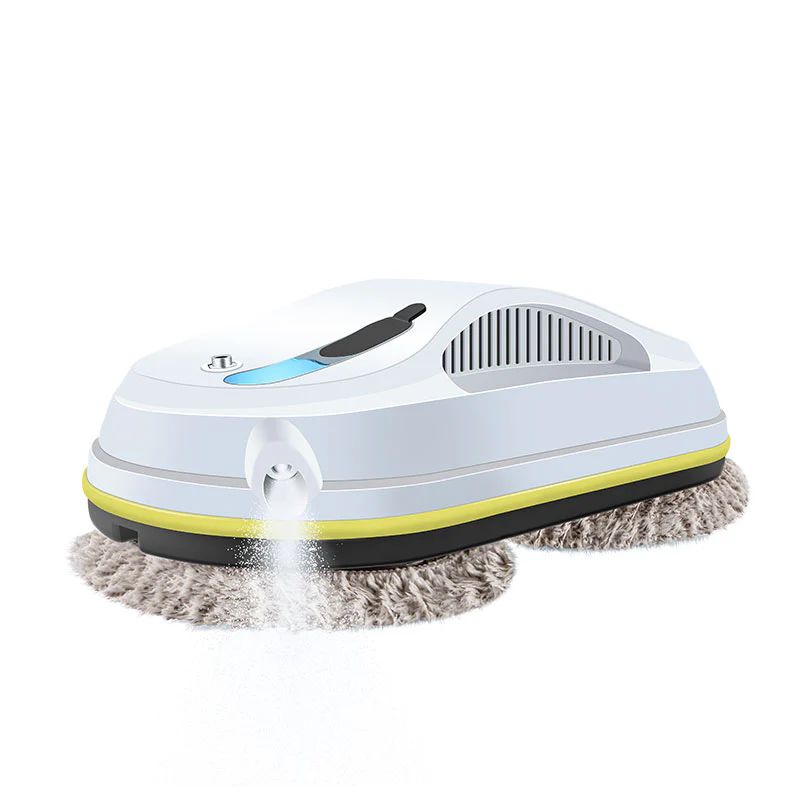
Finally, the market is set to expand beyond indoor floor cleaning to encompass a much wider range of cleaning tasks and environments. A significant growth area is the market for robotic window cleaners and robotic pool cleaners, which automate other tedious household chores. The market for robotic lawn mowers is also growing rapidly, with companies developing more intelligent models that use GPS and computer vision for navigation rather than relying on buried boundary wires. In the commercial space, we are beginning to see the emergence of robots designed for outdoor cleaning, such as autonomous sweepers for parking lots and public squares. The Cleaning Robot Companies List size is projected to grow USD 70.54 Billion by 2035, exhibiting a CAGR of 22.3% during the forecast period 2025-2035. This expansion into new applications and environments represents a massive increase in the total addressable market. The companies that can successfully leverage their core expertise in autonomous navigation and robotics to diversify their product portfolios and enter these adjacent markets will be the long-term winners in the broader automation revolution.
Top Trending Reports -

 English
 Arabic
 French
 Spanish
 Portuguese
 Deutsch
 Türkçe
 Italiano
 Russian
 Romaian
 Portuguese (Brazil)
 Greek
Greek